
Dentists often take x-rays during a new patient or routine exam. Why do they take dental x-rays? What do dental x-rays show? We recommend that yearly oral x-rays be taken during a routine exam to make sure you’re getting the best information about the health of your teeth, gums and mouth.
Why do dentists take x-rays?
At every regularly-scheduled dental exam, the dentist will look inside a patient’s mouth to check the teeth for cavities or signs of other problems. However, there are parts of the teeth and mouth that a dentist can’t see with his eyes alone. Dentists rely on x-ray images to determine the health of the bone and areas of the teeth they would not otherwise be able to see.
What do dental x-rays show?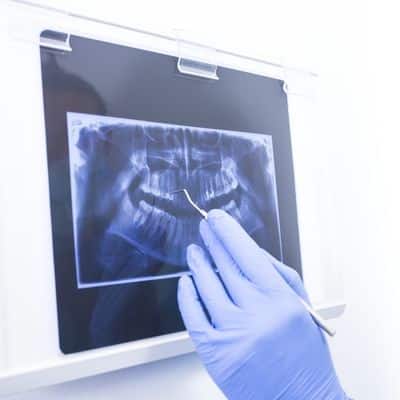
- Cavities
- Infections
- Developing teeth
- Bone health
- Tumors and cysts
Cavities
While some large cavities are detectable immediately upon a visual examination, other cavities are invisible to the naked eye. Sometimes cavities develop between the teeth or under the gums where they are invisible, and others are small enough to escape detection. Using x-rays, a dentist can diagnose hidden or small cavities and treat them before they become big problems.
Infections
Teeth can develop infections at their root. If not diagnosed or treated, these infections can cause swelling and pain. An x-ray of the root of the tooth can help a dentist determine if an infection requires treatment.
Developing teeth
X-rays show teeth that have not yet erupted or become visible in the mouth. Dentists use x-rays to make sure permanent teeth are developing normally and to check for missing teeth. They may use x-rays to determine if a patient is likely to need orthodontic treatment in the future. Dentists can also see impacted teeth, like wisdom teeth, and determine if they require intervention.
Bone health
While a dentist can examine the gums visually, he cannot see the bone that supports the teeth and gums. Bone health is critical to maintaining good oral health. Dental x-rays show the level and density of the bone structure that supports the teeth. This helps the dentist determine if the patient needs any special gum treatments. X-rays also help a dentist determine if a patient’s bone is healthy enough to support certain dental treatments, like implants.
Tumors and cysts
While rare, a patient can develop tumors or cysts in the jaw bone. A dentist can use a special kind of x-ray, called a panoramic x-ray, to check the entire jaw for abnormal growth.
Dentists use x-rays as an essential diagnostic tool. Dental x-rays reveal much about the health of teeth and the supporting bone and can help you and your dentist make informed treatment choices to keep your smile healthy.
Frequency and Types of Dental X-Rays
There are different types of dental x-rays, each serving a unique purpose. Bitewing x-rays, taken once a year, show the upper and lower back teeth and are useful for detecting decay between teeth. Periapical x-rays focus on the entire tooth, from the crown to the root, and the surrounding bone, helping identify issues below the gum line. Panoramic x-rays provide a broad view of the entire mouth, including the jaws, teeth, sinuses, and nasal area, and are typically taken every few years or as needed for comprehensive assessments.
Safety of Dental X-Rays
One common concern patients have about dental x-rays is exposure to radiation. However, modern dental x-rays are very safe, thanks to advancements in technology. Digital x-rays, which are commonly used today, emit significantly lower levels of radiation compared to traditional film x-rays. Additionally, dentists take precautions such as using lead aprons and thyroid collars to protect patients from unnecessary exposure.
Benefits Beyond Diagnosis
Dental x-rays do more than just diagnose problems; they also play a crucial role in preventive care. By identifying potential issues early, x-rays help dentists provide treatments that prevent minor problems from developing into more serious conditions. This proactive approach not only preserves oral health but also minimizes the need for more extensive and expensive treatments in the future.
Special Considerations for Certain Patients
Certain patients may require more frequent x-rays due to specific health conditions or dental issues. For instance, individuals with a history of periodontal disease, frequent cavities, or ongoing dental work may need x-rays more often to monitor their oral health closely. Pregnant patients, on the other hand, may need to avoid x-rays unless absolutely necessary. Always inform your dentist of any health changes to ensure the safest and most effective care.
Integrating X-Rays into Overall Health
Dental x-rays are not only vital for oral health but can also provide insights into overall health. For example, signs of osteoporosis can sometimes be detected through dental x-rays, as the condition can affect the density of the jawbone. Additionally, certain systemic diseases, such as diabetes, can impact oral health in ways that are visible on x-rays. By integrating dental x-rays into your overall health care routine, you can ensure a comprehensive approach to your well-being.
Dr. Hooper will let you know when you are due for x-rays. If you have any questions, don’t hesitate to ask! Call us today to schedule your appointment at (757) 417-7300 or request an appointment online.


